Simple Calorie Counting for Weight Loss (Even If You Hate Math)
Numbers can be overwhelming.
If you look at the labels on foods and feel exhausted mentally, you’re not alone. You’ve wanted to weigh less. You continually hear about calories. But thinking about calculators, spreadsheets, and mathematical formulas is exhausting.
But you still want the results. You still want your clothing to fit better. You still want to feel lighter in your body. And you still want to know if anything you do is going to result in losing weight.
This is a guide for you if you would like to count calories to help with weight loss but don’t want to feel like you are back in an algebra class. There will be no graphs or complicated equations. This guide will provide you with straightforward rules, simple examples and short cuts you can actually use while you’re busy with the rest of your day.
In this guide, you will learn how calorie counting for weight loss works in everyday language. How well calorie counting works for losing weight. And how to make calorie counting as low-math as possible. By the end of this guide, you’ll have a low-stress, flexible method for utilizing calories as a tool, and not a cage.

What Is Calorie Counting for Weight Loss, In Plain English?
A calorie is simply a unit of energy. Your body uses energy constantly throughout the day-even when you’re sitting. Your heart, your lungs, your brain, and your muscles are all burning energy.
Calorie counting for weight loss involves being somewhat aware of how many units of energy come into your body from the foods you eat versus how many units of energy your body expends (burns) each day.
If you consume more units of energy than your body has used up, your body stores the excess units. Over time, those stored units show up as fat.
Conversely, if you consume fewer units of energy than your body has used up, your body must draw upon its own stores of fat to generate the additional energy. That’s how fat loss occurs.
Can you lose weight by counting calories? Yes. If you consistently maintain a caloric intake slightly below what your body consumes, your weight will trend downward over time.
A simple real life example
Let’s say your body consumes approximately 2200 calories per day. You begin to consume approximately 1800-1900 calories per day. You feel somewhat hungry at times, but you aren’t miserable. After several weeks, your weight begins to gradually decline. It is the difference between your daily caloric consumption and your daily caloric expenditure that produces the weight loss.
On the other hand, let’s consider another scenario. You determine you’re “good” Monday through Thursday, but you never really monitor your portion sizes. You skip breakfast, then you overindulge at dinner, and you never pay attention to your portion size on weekends. Consequently, your weekly caloric intake averages out to be greater than you anticipated. As a result, your weight remains static and you feel perplexed.
There is nothing wrong with your body. Your weekly caloric intake simply does not match your weight loss expectations.
When calorie counting might not work well
Counting Calories is Powerful – But Not Magic — Calorie Counting for Weight Loss can seem like an endless task if:
• You consistently miscalculate portion sizes.
• You are eating because you are stressed, bored or out of habit.
• You set your calorie target too low.
Then the tool (calorie counting) is good; however, the way it is being utilized may require a gentler approach, and that is where this guide can help you develop that gentler approach.

Why Calories Matter More Than Fancy Diet Rules
All successful diets have one thing in common. All diets (keto, low-carb, low-fat, IF, clean eating, etc.) allow you to consume less total calories whether they say so directly or indirectly.
Think of your body like a gas tank, calories are gasoline. If you continue to put more gasoline in your gas tank than your vehicle consumes, then that excess gas must go somewhere. In your body that “somewhere” is fat storage.
Alternatively, think of your body like a savings account. When you eat food, you add funds to the account, and when your body burns calories, you remove funds from the account. If you spend more dollars than you save, your account will decrease. Conversely, if you save more dollars than you spend, your account will increase. The amount of fat you store is equivalent to the savings account balance.
Just as you do not need to track every dollar to be smarter with your money, you do not need to count every single calorie to understand the concept of the energy in/energy out principle. As long as you are within a range that allows your body to recognize a difference, then you are using the principle effectively.
Is Calorie Counting the Best Way to Lose Weight?
You may ask yourself if calorie counting for weight loss is the best method for losing weight. Calorie counting is one of the most studied methods. The research and real-life data both support the fact that individuals who have a basic understanding of how calories work are more likely to lose weight and maintain their loss.
Advantages of calorie counting:
• Flexible, you can incorporate foods that you enjoy
• Works well with any type of meal plan
• Teaches you which types of foods are high in calories per serving unit (i.e. density)
Disadvantages of detailed calorie tracking:
• Can be perceived as an obsession by some people
• Can become a numbers game instead of listening to your body
• Requires a lot of time if you are trying to be precise
This article provides a brief overview of a casual, simplified form of calorie counting. You will not be asked to log every single crumb. This articles goal is to provide you with a gentle reminder in the form of a number to guide you, rather than an absolute judge.
A Simple Shortcut Formula You Can Do In Your Head
To help adult consumers lose weight, a basic point of departure may be:
- Body weight (in pounds) x 10 to 12
Use the lower figure if you are short or inactive.
Use the higher figure if you are tall or are more active.
Example 1: You weigh 180 pounds.
180 x 10 = 1,800 calories
180 x 12 = 2,160 calories
A starting goal could be around 1,900 to 2,000 calories per day.
Example 1: You weigh 180 pounds.
180 x 10 = 1,800 calories
180 x 12 = 2,160 calories
A potential initial goal could be somewhere between 1,900 to 2,000 calories each day.
Example 2: You weigh 220 pounds.
220 x 10 = 2,200 calories
220 x 12 = 2,640 calories
You might begin at 2,200 to 2,400 calories.
The exact number doesn’t matter. Think of this as an entire “lane” on the highway, not a tightrope.
If the number seems really low, then you may begin at the upper end of the range. If you are smaller or have a desk job, stick closer to the lower end of the range.
How To Adjust Your Calories Based On Real Life Results
Your body provides you feedback. You can rely on that rather than complicated numbers.
Below is a simple method:
- Determine your baseline calorie range by applying the equation provided earlier.
- Eat approximately that amount of calories most days for 2-3 weeks.
- Weigh yourself several times a week or pay attention to how clothes fit.
If your weight is not decreasing at all over the course of 2-3 weeks, then you either:
- Reduce your daily average by about 150 to 200 calories, or
- Increase some type of activity such as walking for 20 minutes each day.
Give it another 2 weeks before assessing the situation again.
If your weight drops too quickly and you become fatigued and/or extremely hungry, you can increase your calorie intake by about 100 to 150 calories.
You do not have to adjust your target every single day. You are slowly and calmly tweaking things like turning up/down the volume on a radio.
Low-Stress Methods To Track Calories When You Don’t Like Numbers
You now have a general idea of what your calorie range should be for your calorie counting for weight loss. Next, you need to monitor your calorie intake in a way that does not feel like doing homework.
Perfect accuracy is not required; you are attempting to establish habits that you can maintain during a typical Tuesday afternoon when life is chaotic.

Use Apps and Labels To Do the Math For You
You can allow tools to handle the majority of the mental work.
An easy way to do this is:
- Download a basic calorie tracking application
- Utilize the barcode scanner for packaged products
- Search for common items such as “grilled chicken breast” or “banana”
Most applications will store your frequent foods, therefore it becomes simpler over time.
When you review a food label, concentrate on the following two areas:
- Serving size (for example, 1 cup or 30 grams)
- Calories per serving
If a food label states that there are 200 calories in 1 cup of cereal and you consume 1 cup, you would enter 200 calories into the application. If you believe your bowl has more than 1 cup, you would possibly put 300 into the application.
In addition, you may only record your primary meals and snacks. For instance, only log breakfast, lunch, dinner, and dessert, and disregard the tiny extras. While this will not be accurate, it will still direct you toward where you need to go.
Build “Go To” Meals With Known Calories
Another way to make calorie counting for weight loss is by repeating what works and using similar types of food.
You create a few “regular” foods and you use them repeatedly through the week.
For example:
- Breakfast – Greek yogurt with berries & honey
- Lunch – A turkey sandwich with an apple and baby carrots
- Dinner – Chicken, rice, and a big serving of vegetables
After doing this once, you just look at the calorie count, write it down, and then stop thinking about the calories for each meal every day.
When you know that your normal breakfast has approximately 350 calories and your normal lunch has approximately 500 calories, you are half-way there; you don’t have to worry about the rest of your meals/snacks.
Less effort daily will save you from having to constantly guess.
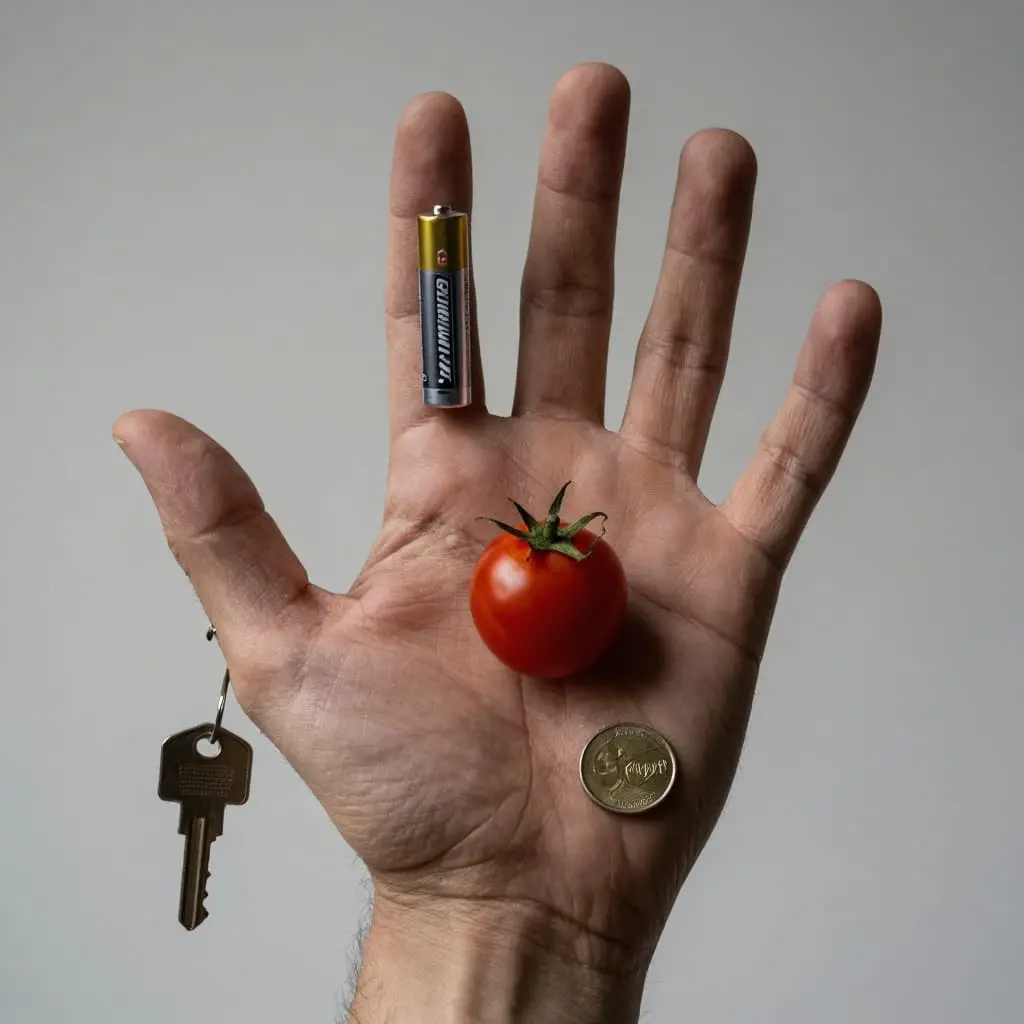
Use Hand Portions and Visual Cues Instead of Exact Numbers
Not always possible to measure/weight everything, whether you’re eating at home or out at a family gathering or a company sponsored lunch.
Hand measurements can serve as a quick visual guide for how much you should be consuming, based on hand portion sizes.
Portions of protein (meat, fish, tofu), carbohydrates (rice, pasta, potatoes) and fats (oils, butter, nuts) are estimated to be:
- Protein – 1 to 2 hands
- Carbohydrates – 1 to 2 cupped hands
- Fat – 1 to 2 thumbs
- Vegetables – 1 to 2 fistfuls
Using hand portions isn’t scientific perfection. They do provide a quick visual cue to give you a ball park figure for your calorie intake.
As long as you follow general guidelines for portions of your treat foods, your overall calorie intake will be within a good range for weight loss without having to calculate every calorie.
Intermittent Fasting vs Calorie Counting for Weight Loss: Which Is Easier?
You may be wondering if intermittent fasting vs calorie counting for weight loss is easier for you.
Both intermittent fasting and calorie counting are used to achieve weight loss goals. The key difference between them is that calorie counting determines how many calories you consume while intermittent fasting determines when you consume those calories.
Since calorie intake remains constant regardless of when it’s consumed, either method could be beneficial for achieving weight loss.
Therefore, it ultimately depends on your personal preferences and lifestyle habits.
How Intermittent Fasting Helps You Eat Fewer Calories Without Counting
Intermittent Fasting usually involves restricting how much time you have to eat. Most popular styles include 16/8 (eat all food within an 8 hour window) and 5:2 (eat normally for 5 days and limit food to 500-600 calories on the other two).
An example of intermittent fasting would be eating between 12 pm – 8 pm and drinking nothing but water, black coffee, or plain tea throughout the rest of the day. This can help you:
- Eliminate the habit of mindless snacking early and late
- Reduce the number of meals consumed in a given day
- Provide you with the ability to say “no” to impulse snack foods.
It’s still possible to over-eat while in the eating window; however, many people report finding their overall caloric intake decreases as a result of this method.
Intermittent Fasting isn’t a magic bullet. It’s effective due to the fact that in most cases you’re consuming fewer calories.
Should You Count Calories, Fast, or Combine Both?
Fasting may cause frustration if you dislike having to follow a specific schedule. Similarly, counting calories can also become frustrating if you dislike tracking your calories.
Here is a very easy way to decide whether you will count calories or try to incorporate some form of intermittent fasting into your diet:
- If you prefer to create a structured meal schedule based upon a set amount of time each day and are comfortable with skipping breakfast, then try using a low-key, non-restrictive fasting window along with some level of calorie tracking.
- If you prefer to eat at a variety of times during the day and want to maintain awareness of portion sizes, then simple calorie counting may work well for you.
- If you want to combine both methods, you could try limiting your eating window to 6 hours per day (i.e., 10 am – 4 pm), and target approximately 1800 – 2000 calories per day.
Ultimately, there is no one size fits all approach. The best approach for you is the one you can stick to when your life gets busy and stressful, and when you don’t feel motivated.
The best plan is to make calorie counting so simple that you will actually stick to it.
Make Calorie Counting So Simple You Can Actually Stick With It
What does that mean? That means creating habits, rather than simply establishing rules. It means treating yourself with compassion and kindness, instead of shaming yourself when you’re not able to follow your plan perfectly on certain days.
Easy Rules of Thumb for Daily Eating (No Calculator Needed)
Here are five basic habits that influence the amount of calories you consume without you having to track everything:
- You can fill about half of your plate with vegetables most meals. Vegetables are low in calories and they help keep you feeling full.
- You should include some form of protein in every single one of your meals such as eggs, chicken, fish, tofu, beans, or Greek yogurt. Protein will also help to reduce hunger, and help to protect your muscles.
- Most of the beverages you drink should be zero calories. Examples would include water, unsweetened tea, or black coffee. This will allow you to save those calories for the food you enjoy eating.
- You may want to save room in your stomach for something fun, rather than trying to convince yourself that you won’t want to have it. Most people will give themselves anywhere from 150 to 250 calories per day to indulge in something they really want.
- These habits will quietly decrease your overall daily calorie consumption without requiring you to use a calorie counter 24/7.
These habits will quietly decrease your overall daily calorie consumption without requiring you to use a calorie counter 24/7.
Although you’re still using calorie counting as a way to lose weight; you’re just accomplishing this by creating good eating habits (and developing smart ways to make healthy food choices), rather than constantly calculating your caloric intake.
How To Handle Eating Out, Weekends, and Treats Without Blowing Your Progress
Life happens, and sometimes it happens when we least expect it. A birthday party, a trip to the grocery store, and getting pulled into a fast-food restaurant while driving, etc. It doesn’t mean you’ve blown your diet completely!
Here are a few basic tips to consider:
- When possible look at the menu online, then try to find an item on the menu that’s similar to what you normally eat, i.e. grilled meat, vegetables, a carb.
- You can share larger portion items, i.e., split your fries, split your dessert.
- You can measure out the portions of each component of your meal based upon how many hands you have. For example, a serving size of protein is approximately the size of your palm; a serving size of carbohydrates is approximately the size of your fist; and a serving size of fat is approximately the size of your thumb.
- You can choose to eat a little less before or after a large meal, so you don’t have to completely ruin your whole day.
Just because you ate a lot of calories on the weekends, does not mean you’ve “started over” on Monday. You can simply return to your regular pattern of eating and maybe cut back on calories for a couple of days.
It’s really important to drop the guilt. Guilt often leads to all-or-nothing thinking, and all-or-nothing thinking can lead to overeating. By making calm, simple choices, you’ll get back to a balanced state of being.
Conclusion
You are aware of the basic fact that calories are what cause the loss or gain of body weight, not some mythical “rules” or secret foods. You also know you don’t have to be perfect about counting calories in order to get consistent results.
You have learned how effectively calorie counting for weight loss can be done in a casual way that can be easily adapted to a busy lifestyle. As stated earlier, both intermittent fasting and calorie counting can be used for weight loss as long as they both reduce total caloric intake.
You can start small. Use the shortcut method to find a rough number of daily calories you want to consume, record one typical day with either an app or paper and pen, and notice the insight you obtain. Then, adjust your calorie count a small amount each week.
You do not have to torture yourself in order to make changes. Simply establish new habits, develop some self-awareness of your eating habits, and be patient with your own rate of progress. Today, you can confidently answer the question, “Is it possible to lose weight by tracking calories?” with a resounding yes.